
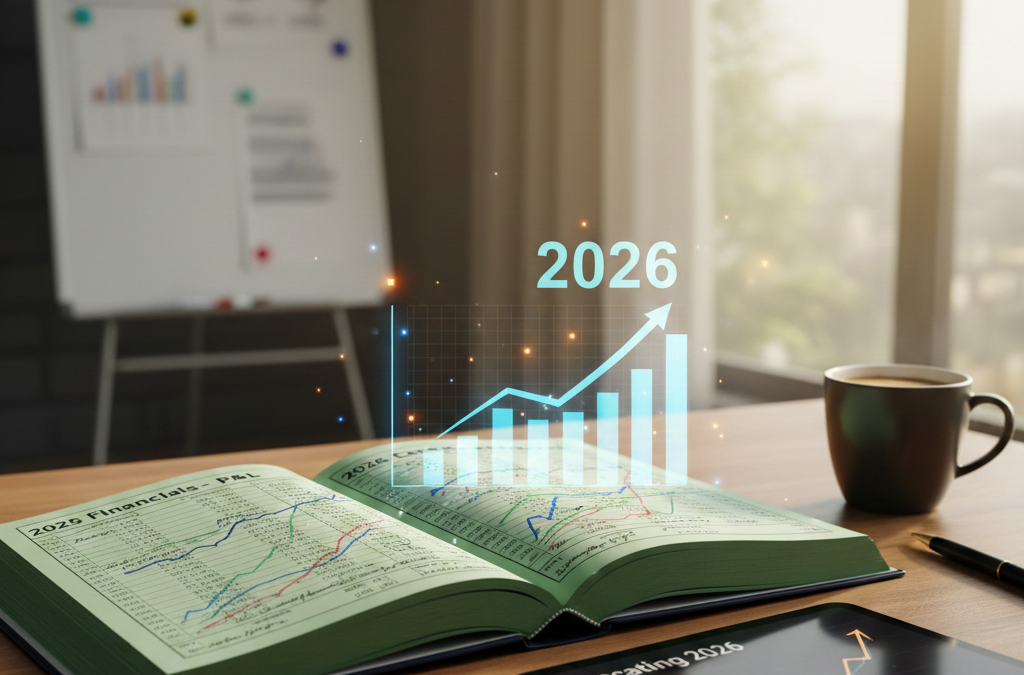
Forecasting 2026: Using Your 2025 Data to Predict This Year’s Cash Flow
As a small business owner, looking at your bank balance can sometimes feel like looking at the weather: you know what it is now, but you aren’t always sure when a storm might roll in.
As we step into 2026, the most powerful tool you have to predict your financial future isn’t a crystal ball; it’s your 2025 financial data. By analyzing last year’s numbers, you can build a roadmap that ensures you have the cash you need to grow, hire, and thrive this year. Identify Your Seasonal “Highs and Lows”The first step in forecasting is recognizing your business’s natural rhythm. Very few businesses have perfectly flat revenue year-round.
Review Monthly Revenue:
Look at your 2025 Profit & Loss (P&L) statement. Which months saw a spike? Which months felt lean?
The “Lags” and “Leads”: If you are a B2B company that saw high sales in November 2025, did the cash actually hit your bank account in December or January? Understanding the collection gap is vital for 2026 planning.
Distinguish Fixed vs. Variable Costs: Your 2025 data will show you exactly what it costs to keep the lights on versus what it costs to make a sale.
How to Forecast for 2026
Fixed: Rent, Software Subs, Insurance: Assume these stay the same, but add a 3–5% “inflation buffer.”
Variable: COGS, Shipping, Commissions: Calculate these as a percentage of sales based on 2025 ratios.
Pro Tip: Look for “subscription creep” in your 2025 data. If you’re paying for tools you stopped using last year, cut them now to instantly boost your 2026 cash flow.3.
Calculate Your “Burn Rate” and “Runway”: If your business were to have a month with zero sales, how long could you survive? Your 2025 data tells you your average monthly operating cost.
In 2026, aim to have at least 3 to 6 months of operating expenses in reserve. If your 2025 data shows you were living “hand-to-mouth,” your primary goal for Q1 should be building that cash cushion.
Adjust for 2026 Realities:
While 2025 is your baseline, don’t follow it blindly. Adjust your forecast based on:
Price Increases: If you raised your prices in late 2025, your 2026 revenue per unit will be higher.Market Trends: Are your raw material costs rising? Use 2025’s spending habits but adjust the unit price upward.
Planned Growth: If you plan to hire in June 2026, account for the hiring costs and the “ramp-up” period before that new employee generates revenue.
The Bottom Line
Cash flow forecasting isn’t about being 100% accurate; it’s about eliminating surprises. When you use your 2025 data to build a 2026 forecast, you stop reacting to your bank balance and start managing your destiny.
We can help – Contact us today!
Follow us on LinkedIn – Zumifi.
Zumifi is how I manage my company efficiently, easily, and effortlessly (on my part), almost as if it were magic!”
– Gary Levenberg, KID Group, San Francisco, CA